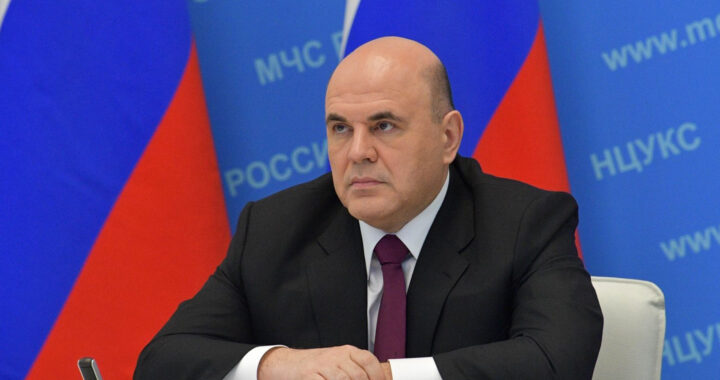
Russia has terminated three longstanding military cooperation agreements with Portugal, France, and Canada. The termination was effected by a decree signed by the Russian Prime Minister, Mikhail Mishustin, and published on 5 December 2025. The Russian Foreign Ministry has been instructed to begin diplomatic notification procedures.
The three canceled agreements date from 1989 to 2000. These are the 1989 agreement between the former Soviet Union and Canada, which concerns military-line visits, the 1994 agreement with France on defense cooperation, and another 2000 agreement with Portugal on military cooperation. These pacts were signed during a period of post–Cold War rapprochement.
Note that the 1989 USSR-Canada agreement came just weeks after the fall of the Berlin Wall. This was during a time when the Soviet leadership under Mikhail Gorbachev was trying to restore relationships with Western nations. The 1994 Russia-France agreement was part of the effort of then-President Boris Yeltsin to integrate Russia into European security structures.
Elements of the Russia-France agreement include commitments to consult during crises and build a network of solidarity in Europe. The 2000 Russia-Portugal agreement arrived at a time when the relations between the two countries, despite Portugal being a NATO member, were fruitful and marked by frequent high-level visits and military-diplomatic engagement.
Russian authorities say the agreements are no longer strategically relevant in the current geopolitical context. The cancellations come amidst an increasingly hostile posture from Russia toward NATO and the West. The Russian government under Vladimir Putin perceives continued NATO expansion, particularly toward countries like Ukraine, as a security threat.
Specifically, from the perspective of Russia, the cancelled treaties likely no longer serve their original purpose. This is not an isolated case. In July 2025, Russia had already canceled a 1996 military-technical cooperation agreement with Germany, citing what it described as an openly hostile policy of the German government and aggressive militaristic aspirations.
The termination coincides with ongoing tensions between Russia and the West over the war in Ukraine. Since Russia invaded Ukraine in February 2022, the relations between Moscow and many Western states have become extremely strained. Western financial and defense support to Ukraine remains a crucial factor in enduring and even overcoming the war.
Both France and Portugal are among the supporters of a plan by the European Commission to use frozen Russian state assets, which are held in the European Union and amount to around 2 billion euros, to provide loans to Ukraine. The termination of the agreements comes amid this debate, implying that Russia may view such Western moves as provocative or hostile.
Photo Credit: Government.ru / Mishustin at EMERCOM / 2020 / Adapted / CC BY-SA 4.0