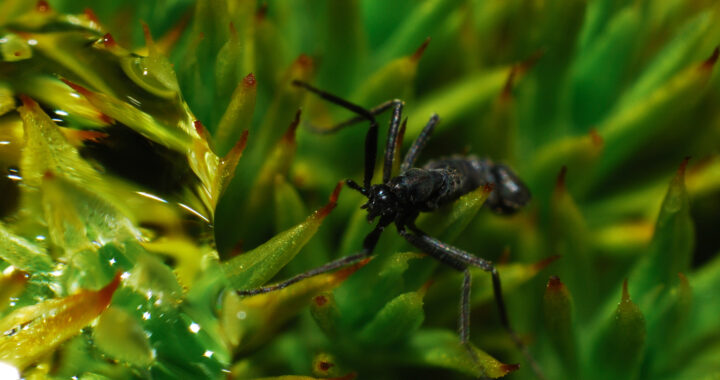
Antarctica, often regarded as one of the most pristine environments on Earth, is now facing evidence of microplastic contamination within its terrestrial ecosystems. A study published in 2025 shows that Belgica antarctica, the only endemic insect on the continent, is already ingesting microplastics in its natural habitats along the Antarctic Peninsula.
Native Insect and Microplastics in Antarctica
Previous studies have shown microplastics in Antarctic seawater, snow, and air, but terrestrial animals were not previously examined. Human activity, ocean currents, and wind transport plastic particles even to remote areas. Microplastic sizes as small as 11 micrometers have been detected in freshly fallen snow near research stations and deep-field sites.
Belgica antarctica is a non-biting flightless midge adapted to extreme conditions. Larvae thrive in moist patches of moss and algae, sometimes reaching densities of up to 40000 per square meter. The species plays an important role in nutrient recycling, breaking down dead plant matter, and supporting Antarctic soil ecosystems.
The adaptability of this earned it the label poly-extremophile. It can cope with intense cold, dying out, exposure to high salt environments, ultraviolet radiation, and drastic swings in temperatures. These characteristics sparked curiosity among researchers. They wanted to know if this toughness also protects the insect from newer stressors like microplastics.
Field surveys during a 2023 research cruise along the western Antarctic Peninsula collected larvae from 20 sites across 13 islands. Laboratory analysis identified microplastic fragments in 2 of 40 examined samples. Although current contamination appears low, these serve as an early warning of environmental exposure even in remote ecosystems.
Biological Impact of Microplastic Ingestion
The new study, led by Nicholas M Teets, included both laboratory exposure and field surveys. Researchers exposed larvae to polyethylene microplastic beads ranging from 27 to 45 micrometers in diameter. Concentrations ranged up to 2000 milligrams per kilogram of substrate over a 10-day experimental period under controlled laboratory conditions.
Results showed that survival and metabolic rates were unchanged at all concentrations. However, larvae exposed to higher levels displayed reduced lipid reserves while carbohydrate and protein stores remained consistent. This is interpreted as a subtle energetic cost, suggesting potential long-term consequences for development and stress resilience.
The ingestion of microplastics by a native terrestrial insect shows the global reach of plastic pollution. While Belgica antarctica has no known land-based predators, buildup could worsen stress under climate change. Reduced fat reserves may impair survival, reproduction, and resilience to environmental extremes over its two-year life cycle.
Nevertheless, this study represents the first documented case of microplastic ingestion in a native Antarctic insect. Findings emphasize that even remote terrestrial ecosystems are not immune to human-derived pollution. Further details are discussed in a paper published on 15 November 2025 in Science of the Total Environment.
FURTHER READING AND REFERENCE
- Devlin, J. J., Lima, C., Kawarasaki, Y., Gantz, J. D., Pavinato, V. A. C., Scaramelli, M., Ferrari, V., Vaccari, L., Birarda, G., Bergami, E., Michel, A. P., Convey, P., Hayward, S. A. L., and Teets, N. M. 2025. “Prevalence and Consequences of Microplastic Ingestion in the World’s Southernmost Insect, Belgica Antarctica.” Science of The Total Environment. 1004:180800. DOI: 1016/j.scitotenv.2025.180800
Photo Credit: Igor Gvozdovskyy / Belgica antarctica, fly in the moss in Antarctica / 2009 / Adapted / CC BY-SA 4.0 International