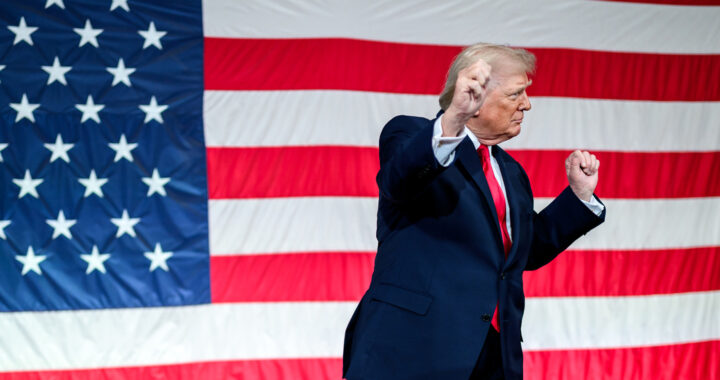
Donald Trump delivered a defiant and furious response on 20 February 2026, following a landmark decision by the U.S. Supreme Court that struck down his global tariff policy. The 6-3 decision of the high court represents a significant legal setback for the flagship but controversial protectionist agenda of the second Trump administration.
In a press conference held at the White House, the U.S. president labeled the ruling a “disgrace to the nation.” He specifically targeted Justices Amy Coney Barrett and Neil Gorsuch, accusing the two conservative appointees of being “unpatriotic” and “completely disloyal.”
The issue centered on the International Emergency Economic Powers Act of 1977. The Supreme Court ruled that the administration overstepped its authority by using this specific law to impose sweeping global tariffs without receiving the required prior approval from Congress.
Chief Justice John Roberts, writing for the majority, underscored that the power to tax and regulate commerce belongs to the legislative branch of the government. He further explained that the International Emergency Economic Powers Act was never intended to grant the executive branch unilateral control over peacetime trade policy.
Joining Roberts were three liberal justices and two Trump appointees. Justices Clarence Thomas, Samuel Alito, and Brett Kavanaugh dissented. They argued the president should have broad latitude to protect national economic security through aggressive executive actions.
Trump wasted no time in challenging the authority of the judicial branch. Specifically, hours after the ruling became public, he signed new documents imposing a 10 percent global tariff. This latest move seeks to bypass the high court decision by utilizing a different federal trade statute. He is now invoking a provision under the Trade Act of 1974.
Note that the specific Section 122 of the Trade Act allows for the temporary imposition of import surcharges to address serious and longstanding balance-of-payments deficits of the United States. These new measures are scheduled to take effect starting on 24 February 2026.
White House officials confirmed that Canada and Mexico will remain exempt from these new duties. Additionally, critical minerals and certain food products, including beef and tomatoes, will be exempt from the tariffs to prevent immediate spikes in grocery prices.
Financial markets reacted with extreme volatility following the announcement. To be specific, while the stock prices of several publicly traded companies initially rose after the ruling, gains evaporated as Trump unveiled his plan to continue the trade war. Investors remain deeply concerned about the ongoing global economic uncertainty.
Legal experts are now questioning whether the federal government must refund billions already collected under the illegal IEEPA tariffs. This potential fiscal crisis could force the U.S. Congress to intervene. Lawmakers are currently debating the implications of such refunds.
Democratic lawmakers, including Senator Chuck Schumer and Representative Katherine Clark, praised the Supreme Court ruling. They described it as a victory for U.S. consumers. Schumer noted that the Trump tariffs have long placed an unfair burden on American families.
FURTHER READINGS AND REFERENCES
- Howe, A. 20 February 2026. “Supreme Court Strikes Down Tariffs.” Scotus Blog. Available online
- The White House. 20 February 2026. “Imposing a Temporary Import Surcharge to Address Fundamental International Payment Problems.” The White House. Available online
- United States Supreme Court. 20 February 2026. “Learning Resources, Inc. v. Trump, 607 U.S.” Justia. United States Supreme Court. Available online