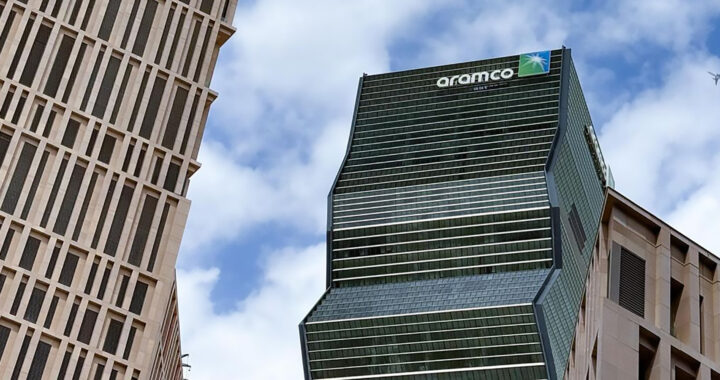
Saudi Aramco, the state-owned oil company of Saudi Arabia, warned on 10 March 2026 of catastrophic consequences following the ongoing blockade of the Strait of Hormuz by Iran.
Saudi Arabia is Attempting to Mitigate the Emerging Global Problem, But Several Issues Persist
In his address to the stakeholders, Amin Naser, the chief executive officer of Aramco, described the situation as the biggest crisis that the oil and gas industry in the region has ever faced. He specifically warned that if the Strait of Hormuz remains closed, the consequences for global oil markets and the broader world economy will be “catastrophic” and “drastic.”
The Strait is a narrow waterway and a choke point between the Persian Gulf and the Gulf of Oman through which about a fifth of the global oil and liquefied natural gas passes.
Iran has blocked the passage following the airstrike from the combined forces of the United States and Israel on 28 February 2026. Specifically, in response to the surprise attack, the notorious Islamic Revolutionary Guard Corps of Iran threatened to set ablaze all commercial shipping and military naval vessels attempting to use the strategic route.
Shipping traffic has plummeted from about 100 tankers per day to single digits. This has effectively erased about 20 million barrels of oil per day from the global market.
Aramco is attempting to mitigate the supply shock through two main methods. Saudi Arabia is rerouting crude through its internal pipeline to the Red Sea port of Yanbu to reach a full capacity of 7 million barrels a day. It is currently exporting about 5 million barrels a day, which is about 70 percent of the usual export volume, after domestic refining needs are met.
The state-owned oil giant is also fulfilling customer orders by using oil reserves held in storage outside the Gulf region. But these finite reserves cannot sustain the market.
However, even with the best efforts of Saudi Arabia to reroute oil via its pipelines to the Red Sea, the alternative routes via pipeline infrastructures have a limited capacity. The world is still facing a sudden loss of roughly 15 to 20 million barrels of oil per day. There is no other source in the world that can suddenly produce 20 million extra barrels to fill the gap.
Oil producers in the Gulf will also be forced to shut down some of their wells to cut their production because their storage tanks can fill up within days if oil remains unshipped.
Strait of Hormuz Blockade Underscores the Dependency and Vulnerability of the Global Economy
Oil prices have since peaked at 119 U.S. dollars per barrel. This is the highest since 2022. The price of Brent crude subsequently fell 14 percent to around 85 to 90 U.S. dollars per barrel. This drop has been attributed to market optimism following the pronouncements of U.S. President Donald Trump, who suggested that the war with Iran could end very soon.
Global leaders are still preparing for the worst-case scenario. G7 countries want the International Energy Agency to prepare for a potential release of emergency oil stockpiles.
Members of the International Energy Agency, an autonomous intergovernmental organization, hold about 1.2 billion barrels in public reserves. China, a non-member, is estimated to have about 1.4 billion barrels in reserve. These total oil reserves could act as a significant cushion if holders choose to cooperate with global oil market stabilization efforts.
Note that prolonged closure can push oil prices to 150 or even 200 U.S. dollars per barrel. This has massive consequences since oil is a base cost for almost everything.
Specifically, when oil prices double, fertilizer and tractor fuel costs spike, thus leading to depressed global food production and eventual food shortage. Shipping and trucking costs rise so sharply that the price of every consumer good increases. Airlines face immediate bankruptcy risks as fuel costs become unsustainable and global travel becomes disrupted.
Asian countries are also highly vulnerable. Note that India, China, Japan, and South Korea get up to 80 percent of their oil through the Strait of Hormuz.
The massive manufacturing sectors in several Asian countries, which the rest of the world relies on, could grind to a halt if their energy supply is cut. Central banks, already struggling with inflation, would be forced to keep interest rates high to combat rising prices. This could trigger a stagflation situation in which prices go up while the economy shrinks.
Hence, even with alternative energy sources like renewables and nuclear energy, the current global economy is still dependent on the constant flow of Middle Eastern oil.
Photo Credit: Ali Lajami / 2024 / Adapted / CC BY 2.0 Generic