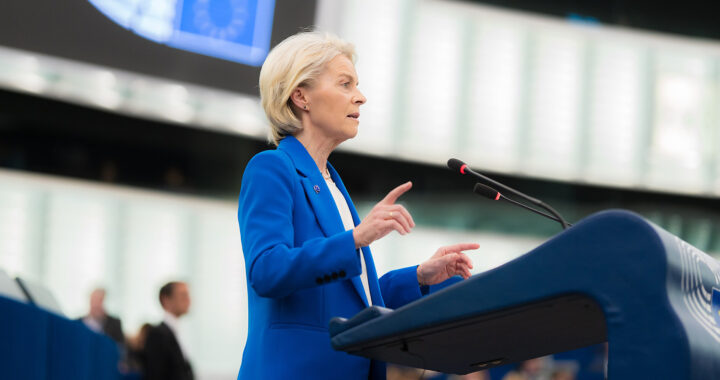
European Greens declared Ursula von der Leyen, president of the European Commission, along with European Parliament member Manfred Weber and the rest of the European People’s Party or EPP, as enemy number one on 6 December 2025 during the second day of their 40th European Congress in Lisbon due to concerns regarding cooperation with far-right groups.
Green leaders stated that the EPP has crossed a red line through repeated engagements that they viewed as enabling legislative positions favored by far-right factions. These include contentious issues concerning migration, social protections, and democratic safeguards that remain central to Green priorities within current European sociopolitical priorities and debates.
The Greens argued that in recent years, especially after the coronavirus pandemic and following the war in Ukraine, the climate agenda has taken a back seat because the economy and security issues have become more urgent. They also accused the EPP of indirectly enabling or supporting anti-immigration, undermining social rights, and threatening democratic principles.
Note that the decision was framed as a deliberate choice. On one hand, they could continue to ally with the center-right, which is the political alignment of EPP, at the cost of tolerating the concessions of EPP whenever it cooperates with far-right groups. On the other hand, they could break away and refuse such alliances. The Greens chose to distance themselves.
European Greens is a pan-European political alliance or coalition of different Green parties across the European Union. As environmentalists and progressives, they position themselves as defenders of social justice, climate action, human rights, and democracy. Their declaration signals a clear break with traditional alliances and a reiteration of their sociopolitical positions.
The EPP has a center-right alignment. It is the largest political grouping in the European Parliament and is influential across many EU countries and often shapes key legislation. von der Leyen, as President of the European Commission and a symbolic figure for center-right EU leadership, her policies and alliances influence the direction of governance across the European Union.
After the 2024 European Parliament elections, the EPP remained a dominant force. However, as center-right and far-right parties gain traction in many countries, the political balance is becoming more volatile. There is growing concern among progressives that environmental and social goals are being overridden by economic, security, and immigration concerns.
Nevertheless, the public naming of EPP as the primary adversary by the Greens increases reputational costs for EPP. It might force EPP to reconsider or moderate any cooperation with far-right groups to retain legitimacy among centrist and progressive partners. Distancing from EPP could also lead to more polarized parliamentary debates or the emergence of new coalitions.
It is worth mentioning that the move also comes despite the fact that EPP leadership, notably via interviews given by Weber, has recently denied cooperation with far-right and extremist parties and reaffirmed commitment to democratic principles. Weber told the media in April 2025 that EPP would never cooperate with far-right and certain extremist parties across the EU.
FURTHER READINGS AND REFERENCES
- European Greens. 6 December 2025. “From Lisbon, Greens Expose the European People’s Party’s Partnership with the Far Right.” News. European Greens. Available online
- Zsiros, S. and Dimich-Louvet, J. 29 April 2025. “Populists and Extremists are EPP’s Main Competitors, Manfred Weber Tells Euronews.” Euronews. Available online
Photo Credit: European Parliament / 2025 / Adapted from original / CC BY-SA 4.0 International