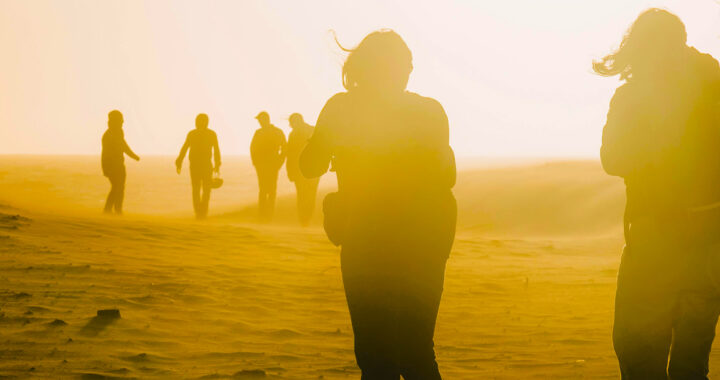
Results of research, led by scientists from the Nature Conservancy and published in the journal Environmental Research: Health in March 2026, warn that climate breakdown is no longer a future threat but a current reality that restricts the daily physical movement of billions.
Scale of Impact
• One in Three Affected: About one-third of the global population now lives in regions where extreme heat severely limits their ability to perform basic physical tasks.
• Sobering Preview: The scientists highlighted 2024 as a critical turning point. It showed the world what life looks like at 1.5 degrees Celsius of warming and provided a preview of the future if global temperatures reach 2 degrees Celsius or higher.
• Expanding Restrictions: A comparison of 1950-1979 to 1995-2024 data revealed an increase in the number of hours per year where heat makes activity dangerous.
Redefining the Standard of Livability
The study uses a physiological approach to define what makes a climate unlivable based on METs or Metabolic Equivalent of Task. This measures energy expenditure.
• Safe Levels of About 3.3 METs
A manageable temperature allows a person under 65 to perform moderate tasks, like walking at a brisk pace or sweeping a floor, without their core body temperature rising dangerously.
• Unlivable Levels of 1.5 METs
Heat has reached levels in worst-affected areas where humans must remain sedentary via sitting or lying down just to survive. Any physical exertion beyond resting can lead to heat stress or death.
Vulnerable Groups
The study also underscored that it is no longer just a risk for the sick. It is affecting people of all ages. Below are further details:
• The Elderly or Senior Citizens
People over 65 are the most at risk because they sweat less effectively. On average, older adults now experience 900 hours of extreme heat stress per year, up from 600 hours in 1950, losing more than a full month of safe daytime hours annually.
• Young Adults in Good Health
Even young adults, who are considered generally and relatively healthier, are now finding it impossible to perform basic tasks or chores, such as climbing stairs or doing housework, during peak daylight hours in many parts of the world.
Geographical and Economic Inequality
• Worst Affected Regions
Affected regions include South-West Asia, which includes Bahrain, Qatar, Kuwait, UAE, Iraq, and Oman; countries in South Asia, which include Pakistan, Bangladesh, and India; and several countries in West Africa, which include Mauritania, Mali, Burkina Faso, Senegal, Djibouti, and Niger.
• Income Gap in Action
However, in wealthy Gulf states, the rich can retreat into air conditioning, while migrant workers on construction sites are exposed to dangerous levels of solar radiation. In contrast, in tropical regions, extreme hot temperatures restrict outdoor activity for up to one-third or 33 percent of the entire year.
FURTHER READING AND REFERENCE
- Parsons, L. A., Baldwin, J. W., Guzman-Echavarria, G., Jay, O., Kalmus, P., Staudmyer, H., Vanos, J. K., and Wolff, N. H. 2026. “Intensifying Global Heat Threatens Livability For Younger And Older Adults.” Environmental Research: Health. 4(1): 015013. DOI: 1088/2752-5309/ae3c3a