The Pacific Ocean is currently undergoing a massive thermal shift that could redefine global weather patterns for the next several years. This transition marks the end of the cooling La Niña phase and the beginning of a powerful warming phase.
Super El Niño Probability
Scientists from the Climate Prediction Center of the U.S. National Weather Service issued an official watch regarding the high probability that the warming will reach extreme levels by the end of August. This event is known as a Super El Niño.
The specific forecast from the Climate Prediction Center indicates that there is a 62 percent chance that El Niño conditions will develop between June and August 2026. Moreover, while it is still early, data also indicate that it could be a very significant event
Further data from the European Center for Medium-Range Weather Forecasts, while suggesting a 98 percent chance of a moderate El Niño, also indicates an 80 percent chance of a strong event and a 22 percent chance of a super event by August 2026.
Note that a Super El Niño is defined by Pacific sea surface temperatures rising at least 3.6 degrees Fahrenheit or 2 degrees Celsius above the historical average. This extreme event is considered cyclical because it occurs roughly once every 10 to 15 years.
Explaining the Mechanism
El Niño and La Niña are opposing climate patterns in the Pacific Ocean and are part of the ENSO or El Niño-Southern Oscillation cycle. The former involves warmer ocean waters and weaker trade winds, while the latter brings cooler waters and stronger winds.
Note that La Niña often leads to cooler global temperatures, drier conditions in the southern U.S., and increased rain and flooding in Australia and the Philippines. El Niño results in wetter conditions in the Americas and droughts in Southeast Asia and Australia.
The cyclical phenomenon begins when the prevailing trade winds across the Pacific Ocean start to weaken significantly. Warm surface waters that usually gather near Asia begin to migrate eastward toward the Americas. This alters the distribution of atmospheric heat.
Scientists describe the entire process as the sudden release of thermal energy that was previously stored deep within the sea. The ocean acts as a massive battery for the planet. Hence, during an El Niño phase, that stored energy enters the troposphere with intensity.
The world is exiting a La Niña phase. Neutral conditions are expected by late spring. This will be followed by El Niño between June and August. The emerging concern stems from the fact that this phase now occurs against the backdrop of human-caused warming.
Possible Regional Impacts
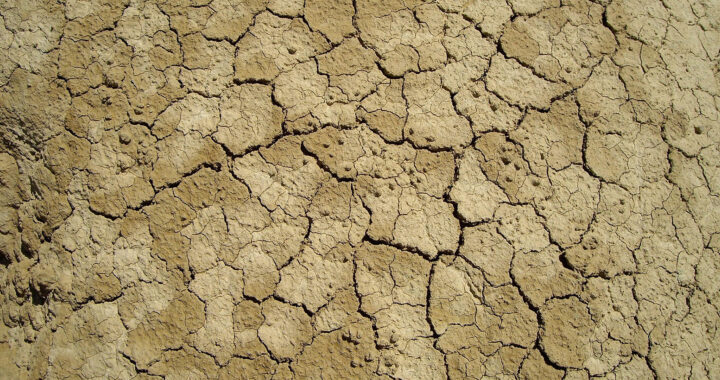
A super El Niño supercharges standard weather patterns to result in more intense droughts in parts of Southeast Asia, Australia, and northern Brazil, and wetter but unpredictable weather patterns in parts of the Southeast and southwest United States and South America.
Moreover, because the phenomenon adds a layer of natural warming on top of human-caused climate change, it typically results in the hottest years on record. While 2026 is expected to see a temperature boost, 2027 could become the hottest year ever recorded.
Agricultural sectors in Southeast Asia and Australia are advised to plan for a significant reduction in seasonal rainfall. Governments are also asked to prepare specific heat response procedures to mitigate the risks associated with extreme hot weather.
Both governments and residents in the southern parts of the U.S. and South America are expected to prepare for heavier rainfall and flooding. Hurricane activities in the Atlantic might be limited, but a super El Niño can make the weather more unpredictable.