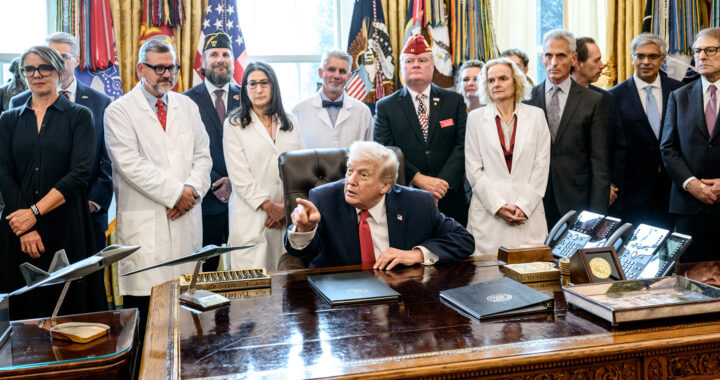
United States President Donald Trump signed an executive order titled “Increasing Medical Marijuana and Cannabidiol Research” on 18 December 2025. This marks a historic shift in federal drug policy.
The order directs the executive branch to fast-track the reclassification of marijuana and expands the framework for CBD research and access. It reclassified marijuana from Schedule I to Schedule III under the Controlled Substances Act.
Marijuana has historically been grouped with drugs like heroin and LSD. Schedule I substances are defined as having “no currently accepted medical use” and a high potential for abuse.
The Schedule III reclassification places marijuana alongside substances like ketamine, anabolic steroids, and paracetamol with codeine. This move formally acknowledges, at the federal level, that marijuana has legitimate medical applications.
Attorney General Pam Bondi and the Department of Justice are directed to expedite the administrative process to finalize this change as quickly as legally possible.
One of the most immediate economic impacts of this order involves federal tax law under the Internal Revenue Code Section 280E.
Note that businesses “trafficking” in Schedule I or II substances are prohibited from deducting standard business expenses from their federal taxes.
However, by moving to Schedule III, cannabis businesses will no longer be subject to 280E, allowing them to operate under the same tax rules as traditional businesses.
This is expected to save the industry billions of dollars and significantly boost the profitability of legal dispensaries.
U.S. President Trump emphasized that the current Schedule I status creates a research gap that prevents scientists from fully understanding the risks and benefits of marijuana.
The order directs federal agencies to facilitate more clinical studies to examine the effectiveness of cannabis for conditions such as chronic pain, anorexia, and chemotherapy-related nausea. It also encourages the use of real-world evidence to assess health outcomes rapidly.
Specific provisions for hemp-derived products, particularly cannabidiol, are also included.
The order authorizes a new Medicare pilot program to provide older adults with access to legal hemp-derived CBD at no cost if recommended by a doctor. The administration will also work with the U.S. Congress to create a clearer regulatory framework.
But the executive order has limitations.
It does not legalize marijuana for recreational use nationwide. It remains a controlled substance. It also does not automatically grant cannabis businesses access to traditional banking or credit card processing because this requires separate legislative action.
Possession and distribution of cannabis outside of state-regulated systems remain subject to federal prosecution.