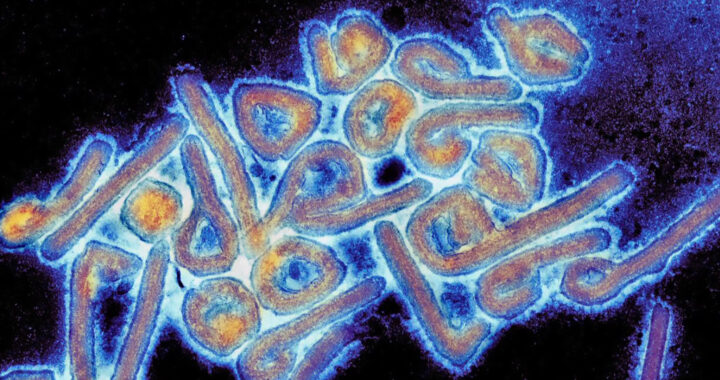
The Marburg virus belongs to the filovirus family. This group of viruses is known for causing severe hemorrhagic fevers in humans. Moreover, while its relative, the Ebola virus, often captures global headlines, the Marburg virus remains a more efficient killer.
Background
Historical data indicate that the virus, which causes severe hemorrhagic fever in humans and other primates, kills nearly 73 percent of those it infects. Some Marburg outbreaks in specific regions sometimes reach a 90 percent mortality rate.
Researchers Gang Ye et al. utilized advanced biochemical tools to observe how the virus interacts with the membranes of human cells to provide a comprehensive look at the infection process. Their report was published on 11 March 2026 in Nature.
The team specifically reengineered non-replicating pseudoviruses that mimic the behavior of the actual pathogen. This method allowed them to isolate the specific entry proteins and measure their performance against different types of healthy human cell receptors.
Mechanism of Entry
Results showed that the entry protein of the Marburg virus is 300 times more efficient at infiltrating cells than the entry protein found on the Ebola virus. This disparity in efficiency helps explain why Marburg outbreaks often result in such high mortality rates.
The secret to its biological efficiency lies in the unique physical orientation of the viral protein. To be specific, while both Ebola and Marburg target the same human receptor known as NPC1, the Marburg virus essentially binds to it with a much stronger grip.
Moreover, once the virus attaches to the receptor, the protein undergoes a rapid and fluid structural transformation. This shape change acts like a key turning in a lock, thus allowing the viral genetic material to slide into the cell almost immediately.
Senior author Fang Li noted that their research presents a framework for comparing how different viruses enter cells. By linking the physical structure of the viral proteins to their infectivity, their study provides a roadmap for developing new treatments.
Implications
The researchers, beyond discovering how the virus attacks, also discovered a potential weakness within its structure. They identified a specific nanobody that can interfere with the binding process by reaching deep into the architecture of the viral protein.
Marburg typically uses a protective molecular cap to hide its most vulnerable sections from the human immune system. This safeguard makes it difficult for standard antibodies to recognize and neutralize the threat before the infection takes hold.
The specific nanobody is small enough to slip past that cap. It can bind directly to the viral protein and prevent the virus from attaching to the human receptor. Laboratory tests showed that this can effectively neutralize the virus and prevent it from entering cells.
FURTHER READING AND REFERENCE
- Ye, G., Bu, F., Turner-Hubbard, H., Herbst, M., Du, L., Yang, G., Liu, B., and Li, F. 2026. “Structures of Marburgvirus Glycoprotein and Its Complex With NPC1 Receptor.” Nature. DOI: 1038/s41586-026-10240-0
Photo Credit: Author The University of Texas Medical Branch at Galveston / 2017 / Adapted / CC BY-SA 4.0 International