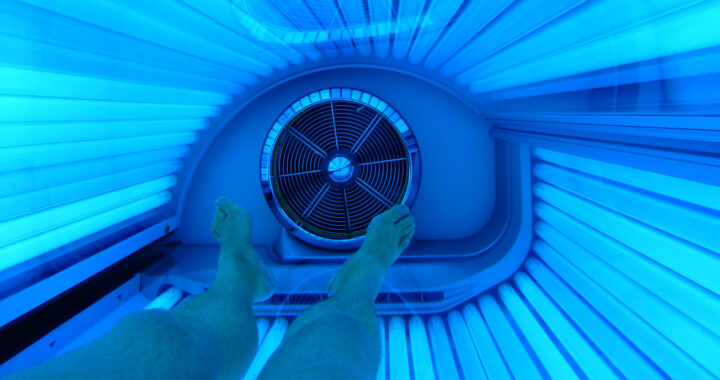
The World Health Organization has classified indoor tanning devices as Group 1 carcinogens since July 2009. This puts them in the same high-risk category as tobacco smoking, asbestos, and arsenic. However, despite this science-backed classification, tanning beds remain popular in North America and Northern and Western Europe.
Tanning Bed Users in Their 30s and 40s Have Older Skin Than Octogenarians
A tanned skin is considered socially desirable and attractive in several Western societies.
People in countries with long, dark winters often use tanning beds to achieve a tan, which is associated with summer, holidays, and an active lifestyle. However, similar to sunlight, ultraviolet radiation triggers cellular mutation and can lead to skin cancer.
A team of researchers analyzed records from over indoor tanning 32000 patients.
One of the general findings is a stark difference in cancer rates. 5.1 percent of those with a history of indoor tanning developed melanoma. The controlled group had only 2.1 percent.
Indoor tanning was also linked to a 2.85-fold increase in the risk of melanoma despite adjusting for risk factors like age, sex, family history, and sunburn history.
The team then collected normal skin samples from 11 tanning bed users and two control groups.
Another striking finding involves the sheer volume of DNA mutations in melanocytes of tanning bed users. Note that melanocytes are melanin-producing neural crest-derived cells. Melanin is a dark pigment primarily responsible for skin color.
Results showed tanning bed users had nearly twice as many mutations as non-users.
The same users in their 30s and 40s possessed skin that appeared older at a genetic level. They often showed more mutations than people in their 70s and 80s.
Critical differences between natural sunlight and tanning beds were also highlighted.
Natural sunlight typically damages about 20 percent of the skin surface. This represents skin areas most exposed to the sun. In contrast, lamps in indoor tanning devices expose almost the entire skin surface to high-intensity ultraviolet radiation.
Dangerous precursor mutations were found even in normal-looking skin where no moles or visible damage were present.
Tanning bed users were more likely to develop melanoma in areas usually shielded from the sun, such as the lower back or buttocks, proving the systemic nature of the damage.
Nevertheless, the team concluded that UV radiation from tanning beds induces melanoma by increasing the mutation burden of melanocytes and by mutagenizing a broader field of melanocytes than are typically exposed to natural sunlight.
Further details of the study was published on 12 December 2025 in Science Advances. P. Gerami is listed as the first author, and A. H. Shain as the team lead.
FURTHER READING AND REFERENCE
- Gerami, P., Tandukar, B., Deivendran, D., Olivares, S., Chen, L., Tang, J., Tan, T., Sharma, H., Bandari, A. K., Cruz-Pacheco, N., Chang, D., Marty, A. L., Olshen, A., Murad, N. F., Song, J., Lee, J., Yeh, I., and Shain, A. H. 2025. “Molecular Effects of Indoor Tanning.” Science Advances. 11(50). DOI: 1126/sciadv.ady4878